

Ralph has gone on an overseas adventure to the continents of Africa and South America. Upon each of his visits to a different country, Ralph has written us a letter about his travels. However, Ralph has been quite 'Unreliable' again and has not told us the name of the country he is in. It is up to us to use the clues in the letter to try and find out where Ralph is.
UNRELIABLE RALPH ROAMs THE WORLD


EGYPT


Did you know..............................
Despite its oil and gas exports, Egypt's largest single source of foreign income is tourism. Visitors flock to the country to see ancient monuments like the Great Pyramids and the Sphinx.People from all over the world come to this country in northern Africa to see its treasures from the past.
Fast Facts
Official Name: Arab Republic of Egypt
Form of Government: Republic
Capital: Cairo
Population: 78,887,007
Official Language: Arabic
Climate: Hot and dry summers; mild winters
Money: Egyptian pound, guinay
Area: 1,001,449 sq km
Major Mountain Ranges: Eastern Highlands
Major River: Nile
GEOGRAPHY
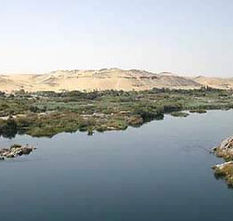
Without the Nile River, all of Egypt would be desert. Only about 2.5 centimeters of rain falls throughout Egypt each year. But each summer, the river rises because of rains at its source far to the south in Ethiopia.
Floods cover the river's valleys, leaving sediments needed for trees, plants, and crops to grow.
Egypt is often divided into two sections: Upper Egypt in the south and Lower Egypt in the north. The sections are named this way because the Nile flows from south to north. The river empties into the Mediterranean Sea.
LANDSCAPE
Southern Egypt's landscape contains low mountains and desert. Northern Egypt has wide valleys near the Nile and desert to the east and west. North of Cairo, the capital, is the sprawling, triangular Nile River Delta. This fertile land is completely covered with farms.

NATURE
Egypt is home to a wide variety of animals and plants, including cheetahs, hyenas, crocodiles, and cobras. The best places to see Egypt's wildlife are in its 21 protected regions, which include oases, deserts, mountains, coastal areas, river islands, and wetlands.Egyptians have always been close to the natural world. The ancient Egyptians left paintings and carvings of large animals like elephants, hippos, leopards, and cheetahs. These animals were once common in Egypt, but they are now rare or extinct because of hunting and habitat loss.


PEOPLE AND CULTURE
About 90 percent of Egyptians are Muslim, which means they are followers of the Islam religion. Islam dominates Egyptian society. About 10 percent of Egyptians are Copts, one of the oldest branches of the Christian religion.Egypt's population is growing rapidly. This puts strains on Egypt's resources, since most people live in a narrow strip of land along the Nile River. Having so many people in such a small area causes overcrowding everywhere, from schools to apartment buildings to hospitals.Children are highly valued in Egypt, especially in rural areas where they help on family farms. Children are also expected to look after their parents in their old age.


GOVERNMENT AND ECONOMY
Egypt's geography, population, history, and military strength have made it highly influential in the region. Egypt is a democratic republic, although some critics claim that it is not truly democratic. Until 2005, there was never more than one presidential candidate to vote for.Despite its oil and gas exports, Egypt's largest single source of foreign income is tourism. Visitors flock to the country to see ancient monuments like the Great Pyramids and the Sphinx.


CLIMATE
Throughout Egypt, days are commonly warm or hot, and nights are cool.
Egypt has only two seasons: a mild winter from November to April and a hot summer from May to October. The only differences between the seasons are variations in daytime temperatures and changes in prevailing winds.
In the coastal regions, temperatures range between an average minimum of 14 C in winter and an average maximum of 30 C in summer. Temperatures vary widely in the inland desert areas, especially in summer, when they may range from 7 C at night to 43 C during the day. During winter, temperatures in the desert fluctuate less dramatically, but they can be as low as 0 C at night and as high as 18 C during the day. The average annual temperature increases moving southward from the Delta to the Sudanese border, where temperatures are similar to those of the open deserts to the east and west.
Egypt receives fewer than eighty millimeters of precipitation annually in most areas. Most rain falls along the coast, but even the wettest area, around Alexandria, receives only about 200 millimeters of precipitation per year.
Some areas will go years without rain and then experience sudden downpours that result in flash floods.
A phenomenon of Egypt's climate is the hot spring wind that blows across the country.
These sandstorms, often accompanied by winds of up to 140 kilometers per hour, can cause temperatures to rise as much as 20 C in two hours. The winds blow intermittently and may continue for days, cause illness in people and animals, harm crops, and occasionally damage houses and infrastructure.


THE GREAT PYRAMIDS AND SPHINX
Ancient Egyptian pyramids are the most well known pyramid structures
Most Ancient Egyptian pyramids were built as tombs for Pharaohs and their families.
The first Egyptian pyramid is believed to be the Pyramid of Djoser, it was built in Saqqara around 4650 years ago (2640 BC).
The Great Pyramid of Giza is the oldest and largest of three pyramids in the Giza Necropolis.
Egyptians buried their dead with burial goods that ranged from everyday items they believed would useful in the afterlife to more expensive items such as jewelry.

The Great Sphinx is one of the most iconic symbols of Egypt, its gigantic and monumental proportions are truly awesome. It was named as 'Abul-hol' by the Bedouins meaning the "father of terror".
It is one of the largest single-stone statues in the world and stands taller than a six-storey building. It was carved out of limestone bedrock and oriented due east, facing the rising sun.
The Riddle of the Sphinx: The famous 'Riddle of the Sphinx' refers to Greek mythology. In this ancient legend the 'Sphinx of Thebes' asked a riddle to all travellers who passed by. Failure to resolve the riddle resulted in death.
The riddle is as follows:
"What goes on four legs in the morning, on two legs at noon,and on three legs in the evening?"
The answer to the riddle is:
"A man. He crawls on all fours as a baby, walks on two legs as an adult, and walks with a cane in old age."
It is one of the largest single-stone statues in the world and stands taller than a six-storey building. It was carved out of limestone bedrock and oriented due east, facing the rising sun.

SUSTAINABILITY
In Egypt, the water consumption per capita was 771 m3/year in 2005 and is expected to reach 582 m3/year by 2025. This means that at the moment, Egypt is already facing a water crisis since the water consumption per person is below the water poverty line (1000 m3/capita/year).
In Egypt, about 80% of the available water resources are consumed for agriculture and the rest are for domestic and industrial activities. The management of these resources is inefficient and a huge amount of fresh water is discarded.
The shortage of water supply will definitely influence the economic and cultural development of Egypt.
In 2010, Egypt was ranked number 8 out of 165 nations reviewed in the so-called ‘Water Security Risk Index’ published by Maplecroft.

