

Ralph has gone on an overseas adventure to the continents of Africa and South America. Upon each of his visits to a different country, Ralph has written us a letter about his travels. However, Ralph has been quite 'Unreliable' again and has not told us the name of the country he is in. It is up to us to use the clues in the letter to try and find out where Ralph is.
UNRELIABLE RALPH ROAMs THE WORLD


BRAZIL


Did you know..............................
Brazil has the greatest variety of animals of any country in the world. It is home to 600 mammal species, 1,500 fish species, 1,600 bird species, and an amazing 100,000 different types of insects.The Brazilian landscape is very varied. It is most well known for its dense forests, including the Amazon, the world's largest jungle, in the north.
Fast Facts
Official Name: Federal Republic of Brazil
Form of Government: Democratic federal republic
Capital: Brasilia
Total Population: 183,888,841
Largest Populated City: Sao Paulo
Official Language: Portuguese
Climate: Mostly tropical; cooler in the south
Money: Real
Area: 8,511,965 sq km
Major Mountain Ranges: Serra do Mar, Serra do Espinhaço
Major Rivers: Amazon, São Francisco, Paraná, Tocantins
GEOGRAPHY
Brazil is the largest country in the continent of South America and the fifth largest nation in the world. It forms an enormous triangle on the eastern side of the continent with a 4,500-mile (7,400-kilometer) coastline along the Atlantic Ocean. It has borders with every South American country except Chile and Ecuador.

The Amazon River is located in South America.
There are over 3000 known species of fish that live in the Amazon River, with more constantly being discovered.
Anacondas lurk in the shallow waters of the Amazon Basin, they are one of the largest snakes in the world and occasionally attack larger animals such as goats that get to close the water.
The Amazon River is also home to the piranha, a meat eating type of fish! Being carnivores, piranhas are known to attack in groups, preying on livestock that strays into the water and possibly appearing in one or two of your own nightmares!
There are no bridges that cross the Amazon, mostly because there is no need, the majority of the Amazon River runs through rainforests rather than roads or cities.
It runs through Guyana, Ecuador, Venezuela, Bolivia, Brazil, Colombia and Peru.
The length of the Amazon River is approximately 6400 kilometres.
THE AMAZON RIVER


LANDSCAPE
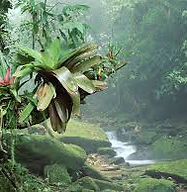
The Brazilian landscape is very varied. It is most well known for its dense forests, including the Amazon, the world's largest jungle, in the north.
But there are also dry grasslands (called pampas), rugged hills, pine forests, sprawling wetlands, immense plateaus, and a long coastal plain.
The Amazon River and the jungles that surround it dominate Northern Brazil. The Amazon is not one river but a network of many hundreds of waterways. Its total length stretches 6,840 kilometers, making it the longest river on Earth.
Thousands of species live in the river, including the infamous piranha and the boto, or pink river dolphin.
South eastern Brazil was once completely covered with dense forest. Now it is the country's industrial capital, home to Brazil's biggest cities: São Paulo and Rio de Janeiro. It covers only 11 percent of the country but houses 43 percent of its population.


NATURE
Brazil has the greatest variety of animals of any country in the world. It is home to 600 mammal species, 1,500 fish species, 1,600 bird species, and an amazing 100,000 different types of insects.
Brazil's jungles are home to most of its animal life, but many unique species also live in the pampas (large treeless plains) and semidesert regions.
In the central-western part of Brazil sits a flat, swampy area called the Pantanal. This patchwork of flooded lagoons and small islands is the world's largest wetland. Here live giant anacondas, huge guinea pig relatives called capybaras, and fierce South American alligators called caimans.
For thousands of years, people have been exploiting the jungles of Brazil. But since Europeans arrived about five centuries ago, forest destruction has been rampant. Most of Brazil's Atlantic rain forest is now gone, and huge tracts of the Amazon are disappearing every year. The government has established many national parks and refuges, but they only cover about 7 percent of the country.


PEOPLE AND CULTURE
Most Brazilians are descended from three ethnic groups: Amerindians, European settlers (mainly from Portugal), and Africans. Starting in the 19th century, waves of immigrants from Europe, the Middle East, and even Japan added to this mix. This diversity of cultures has created a rich religious, musical, and culinary culture.
Brazilians are soccer crazy, and their country has produced some of the best players. The most famous of all is Edson Arantes do Nascimento, better known as Pelé. Brazil has won the World Cup soccer finals five times, more than any other nation, and will host the tournament in 2014.

GOVERNMENT AND ECONOMY
Brazil is a federal republic with a president, a National Congress, and a judiciary. From 1888 until recently, the country struggled with democracy. But in 1985, the military government was peacefully removed, and by 1995, Brazil's politics and economy had become fairly stable.
Brazil has many different soils and climates, so it can produce a great variety of crops. Its agricultural exports include sugarcane, latex, coffee, cocoa beans, cotton, soybeans, rice, and tropical fruits. Brazil is also South America's most industrial nation, producing chemicals, steel, aircraft, and cars.


CLIMATE
The weather is nearly always warm across the whole country and so the temperature and the amount of rain that falls affects the trees and plants that grow across the country. Most of north and central Brazil has the same weather all year round.
In parts of the Amazon Basin, rain falls in frequent thunderstorms, flooding the land along the river. Silt is left over large stretches of the river bank and creates fertile soils which are rich in minerals.
VEGETATION
The world’s largest tropical rainforest can be found in the Amazon Basin in Brazil. Just under half of the country (42% approx) is covered by rainforest while the remainder (just over half) is very different – grassland, pine forest, semi-desert.
RAINFOREST
Over 2,000 different types of trees grow in the wet, hot conditions of the rainforests. The forest is made up of thousands of species of plants and animals and thousands of insects – it is thought to be the most diverse ecosystem in the world. There are different layers, with the tallest trees reaching heights of 50 metre or more.
TROPICAL GRASSLANDS
The Pantanal, a swampland which is the largest of its kind in the world. The Pantanal floods during the wet season, submerging over 80% of the area. During this season the Pantanal water levels rise more than three metre with the result that fertile soil is created by deposits of silt, creating a good soil for growing plants.
SEMI-DESERT
The semi-desert vegetation grows in the hot, dry climate of the north east of Brazil. It is known as Caatinga and is a semi-arid scrub forest. There are two not very well defined seasons: one hot and dry and the other hot and wet.
Caatinga vegetation has a bushy aspect, its plants having small leaves or thorns. This was the way nature found to avoid the loss of water by the epidermis. Besides, some species undergo loss of leaves in the dry season, while some others, like bromeliaceae and cacti, can store water. Vegetation is distributed in an irregular way, contrasting areas similar to forests with others almost devoid of vegetation.
WHICH ANIMAL IS MORE LIKELY TO BE FOUND IN THESE ENVIRONMENTS?


or
or


or


SUSTAINABILITY
THE BAD
In the past three decades about 17 percent of the Amazon forest, or 60 million hectares – an area equivalent to France – has been converted to other land uses. Most of this area has been transformed into low-productivity pastures.
These changes were the result of former strong governmental incentives for forest conversion and population migration to the region, characterizing a development pattern at that time where forests were seen as barriers for economic growth.
Deforestation in the Brazilian Amazon alone releases about 200 million tonnes of carbon annually, accounting for 3 percent of global net carbon emissions and 70 percent of national emissions.
Around 1.5 million hectares per year are harvested for timber
THE GOOD
The government has established a committee involving 14 ministries to design and execute a plan for reducing Amazon deforestation.
Monitoring and control of illegal deforestation have been particularly intensified.
Brazil’s energy matrix is considerably cleaner than that of other developing countries.
About 20 percent of its energy production comes from renewable sources (wood, charcoal, sugar-cane derivatives and others), and if hydroelectric energy is included this percentage goes up to around 60 percent.
By reducing deforestation since 2004, Brazil has avoided the emission of approximately 200 million tonnes of carbon.
A new public forest management law was established in 2006. It stipulates that all public forests should remain public and retain their forest cover. They can be transformed into protected areas, allocated to traditional populations or sustainably used for economic purposes under forest concessions.


